Global Digital Building Strategy & Portfolio Modernization

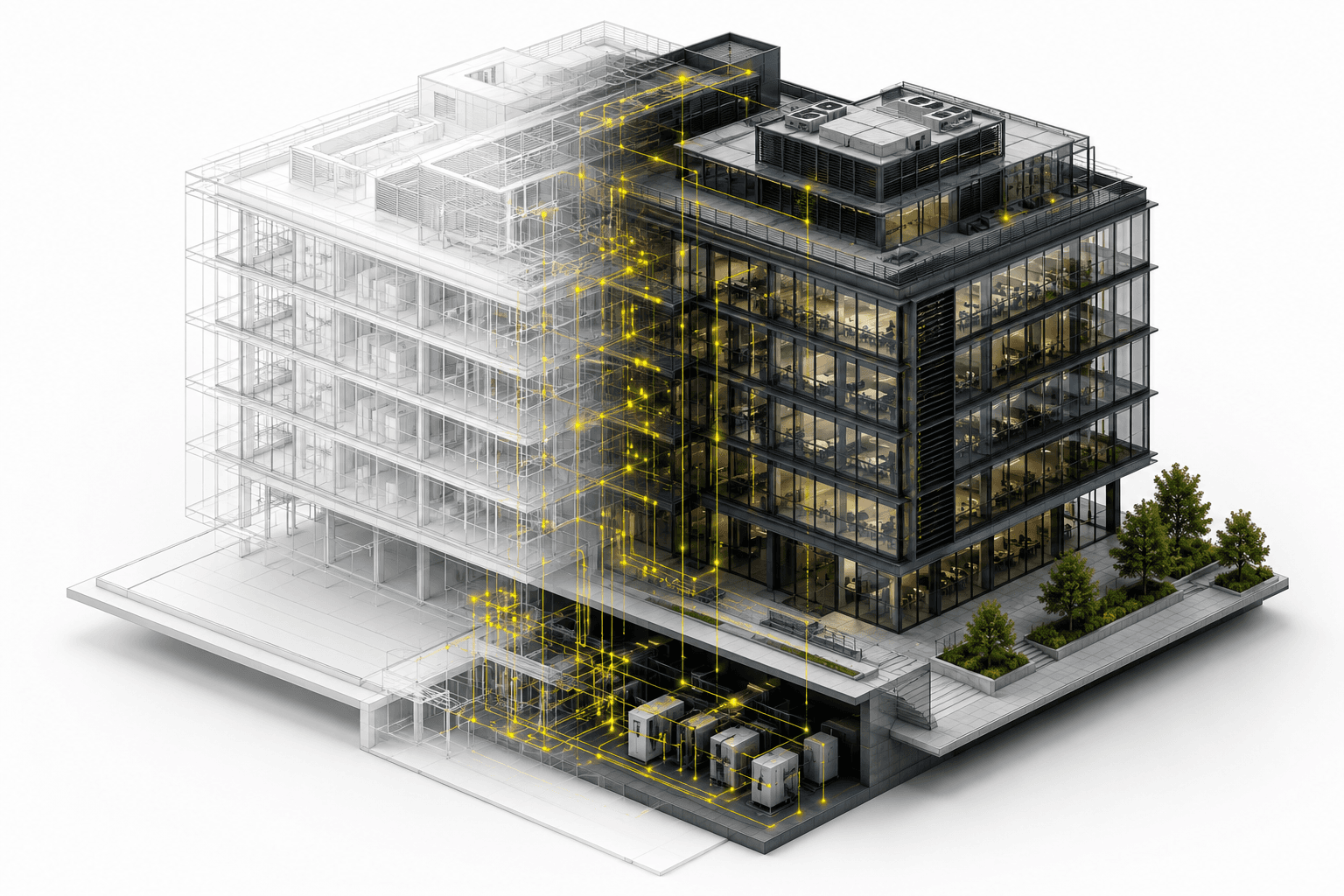
Client: Global Real Estate Owner, Developer & Operator ($100B+ in AUM)
Services: Strategy | Advisory | Portfolio Modernization | Digital Transformation
The Opportunity
A global real estate leader recognized that digital capabilities would become a key driver of asset performance, operational efficiency, tenant experience, and long-term value creation.
The organization’s vision was ambitious: leverage technology, data, and automation to increase net operating income, improve operational performance, attract tenants, and enhance asset value across a global portfolio. At the time, no other organizations had developed a formal strategy for building digitization, making this one of the earliest large-scale digital building initiatives in Canada.
Our Approach
The engagement began with the development of an enterprise-wide Digital Building Strategy. Working closely with executive leadership, real estate management, operations teams, asset management groups, development teams, and technology stakeholders, the project established a shared vision for the future of the portfolio.
The strategy defined the capabilities, systems, governance structures, and investments required to support the organization’s long-term objectives and provided a clear framework for communicating the vision across the business.
Building on this foundation, a Digital Building Playbook was developed to standardize how technology would be evaluated, specified, implemented, and integrated across the portfolio. The playbook established technology standards, modernization principles, use cases, and outcome-driven requirements for consultants, developers, and service providers.
The final phase focused on execution, including portfolio assessments, modernization roadmaps, capital planning initiatives, and implementation programs spanning assets across North America, Europe, and Australia.
Results & Impact
The project established one of Canada’s earliest enterprise-level approaches to digital building transformation and created a repeatable framework for modernization across a global real estate portfolio.
Key outcomes included:
A unified vision for building digitization across the organization
Standardized technology and integration requirements
Consistent modernization planning across asset classes and regions
Improved alignment between technology investments and business objectives
A scalable framework for future innovation and portfolio transformation
Key Insight
Technology is rarely the hardest part of digital transformation.
Organizations often become overwhelmed by emerging technologies, competing priorities, and the complexity of portfolio-wide change. The greatest value comes from first establishing clear business objectives, building organizational alignment, and creating a practical roadmap for execution.
Technology becomes far easier to implement when a strategy and commitment is already in place.
Why It Matters
Digital transformation has traditionally been viewed as something reserved for the world’s largest real estate organizations. While larger portfolios may have greater resources, the underlying principles remain the same.
Building owners of all sizes can benefit from a structured approach to modernization by defining desired outcomes, developing a roadmap, and implementing technology in support of business objectives. The benefits of digital buildings are no longer reserved for industry leaders—they are increasingly becoming a competitive requirement.